

Image Credit: Bosch
Research Alliance Develops Sensor Systems For Autonomous Flight And Driving
Innovative microelectronics cut energy consumption by 90 percent
- A new semiconductor production method aims to maximize energy efficiency while using components with advanced computing power.
- Bosch is the German consortium leader of the publicly funded OCEAN12* project with 27 partners across Europe, 14 of them in Germany.
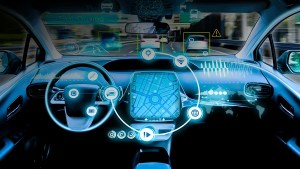
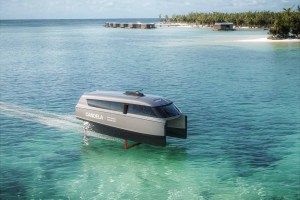
Mobility options in cities are becoming more and more diverse. People go by foot, bike, or e-bike, take buses, trams, or trains, drive their own cars, and in the future will even travel in driverless cars. There are also new options for flight: in conurbations, autonomous flying taxis or drones could transport people or time-critical goods and medications. All these applications require powerful sensors and control systems that save as much energy as possible. This is precisely where the publicly funded OCEAN12* project comes in – a pan-European collaboration of 27 partners from the fields of semiconductor technology, electronics, aerospace technology, and automotive technology. Bosch heads up the German consortium, which consists of 14 organizations. The project partners will be working together up until the end of 2021 to develop various especially energy-efficient components that can collect and process data from the surroundings of vehicles and aircraft. These include surround sensors such as cameras and lidar or radar sensors, as well as microprocessors for processing data. The electronics translate the collected data into commands for downstream components – for example, braking or steering a car or controlling the propulsion of a flying taxi.
The OCEAN12 project’s objective is to ensure that new sensor systems for future mobility concepts consume up to 90 percent less power than today’s systems. ” Dr. Tilman Glökler from Bosch
Comprehensive research needed
Development in the OCEAN12 project is based primarily on Fully Depleted Silicon On Insulator (FD-SOI) technology from the OCEAN12 project partner Global Foundries. This method of semiconductor production involves adding an ultrathin layer of insulator to reduce what are called leakage currents, resulting in lower energy consumption and higher computing speed. Based on this technology, the research alliance partners can subsequently develop components that offer an optimum combination of maximum energy efficiency with advanced computing power. “The OCEAN12 project’s objective is to ensure that new sensor systems for future mobility concepts consume up to 90 percent less power than today’s systems,” says Dr. Tilman Glökler from Bosch, coordinator of the German OCEAN12 consortium. In addition, the new technology makes it possible to build particularly small sensor systems, as sensors containing high-performance evaluation circuits can be integrated as a system on a chip (SoC). “Energy-saving sensor systems are indispensable for automated driving and flying. As we apply our expertise in microelectronics to the OCEAN12 project, we are gradually moving closer to this goal,” Glökler says.
OCEAN12 facts and figures
Funding for the OCEAN12 project (worth 103.58 million euros) comes from the European Union and national organizations. In Germany, the Federal Ministry of Education and Research and the state of Saxony provide financial support. Together, all the sponsors will contribute some 48 million euros over the course of the project from mid-2018 to the end of 2021. The German consortium includes Airbus, Audi, Bosch, and GlobalFoundries as well as numerous SMEs, research institutes, and universities.
* OCEAN12: Opportunity to Carry European Autonomous driviNg further with FD-SOI technology up to 12nm node










 English
  Deutsch
  Español
  Français
  简体中文
简体中文  Svenska
  Русский
  Português do Brasil
  العربية
  Italiano
  Polski
  日本語
日本語  한국어
한국어  हिन्दी
  Norsk nynorsk
  עִבְרִית
المزيد من القصص
سكاي درايف: إطلاق العنان لإمكانية الوصول إلى السفر الجوي باستخدام الطائرات الإلكترونية المدمجة
معرض الإلكترونيات الاستهلاكية 2026: اتجاهات السيارات تميل نحو الذكاء الاصطناعي في ظل واقع سوق السيارات الكهربائية
طائرة Horizon AAM الهجينة الكهربائية الهجينة من طراز Cavorite X7 تحقق انتقالًا تاريخيًا إلى الطيران الأمامي
جيتسون ويوروسيتس تُحدثان ثورة في الاستجابة لحالات الطوارئ غير الطارئة باستخدام تقنية eVTOL والحلول الطبية المتقدمة التي يمكن أن تنقذ الأرواح
مستقبل سباقات UAM eVTOL الجوية تتخذ خطوة جريئة إلى الأمام
التصميم في مجال AAM: كبير المصممين في فرانك ستيفنسون ديزاين، إيوان ماكفيرسون يناقش التطورات في AutoFlight
انضم واستكشف أكبر حدث للتكنولوجيا المتقدمة للمركبات التجارية المتقدمة في أمريكا الشمالية.
شركة BETA تكمل عروض الطيران في جميع أنحاء ولاية يوتا
ALEF – السيارة الطائرة: ريادة مستقبل التنقل الحضري
شركة جديدة تبتكر سيارات طائرة
اختبار Jetson: حدود المرونة مع أول اختبار سباق جوي مأهول eVTOL في العالم!
معدات الحماية الشخصية الكهربائية (PPE) هي شيء حقيقي – تم إنتاجه بواسطة شركة OEL Worldwide Industries ومقرها كولورادو