


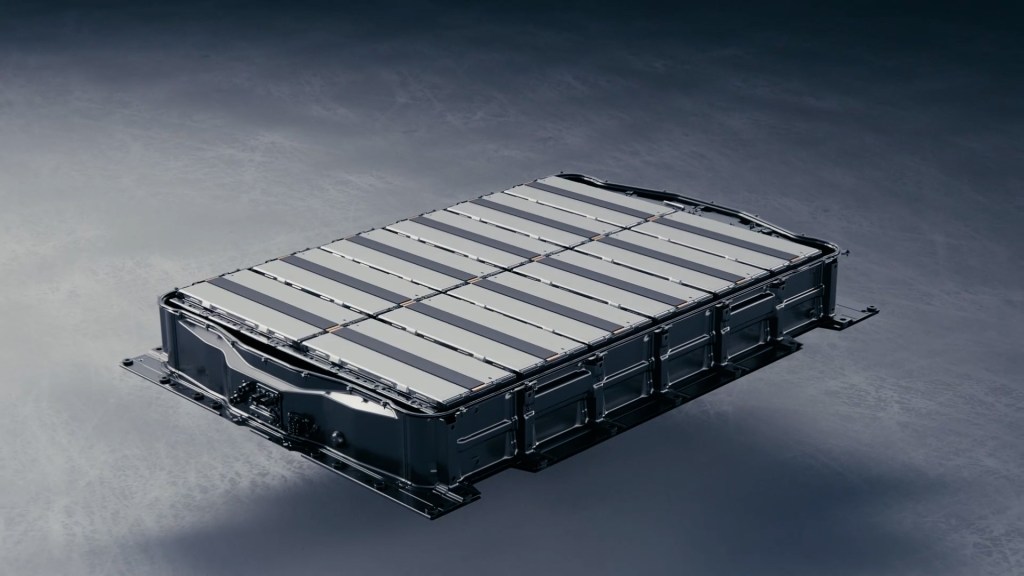
GM Defense, a subsidiary of General Motors, is providing commercial battery electric technology in support of the University of Texas at Arlington (UTA) Pulsed Power and Energy Laboratory (PPEL) and Naval Surface Warfare Center Philadelphia Division (NSWCPD). The project, Evaluation of Electric Vehicle Batteries to Enable Directed Energy (EEVBEDE), is funded by the Operational Energy Innovation office of the U.S. Department of Defense (DoD), through its Operational Energy Capability Improvement Fund (OECIF). UTA PPEL will evaluate the technology to understand current capabilities of commercial automotive batteries under dynamic discharge and charge scenarios. The team’s evaluation of the technology will help provide pathways and options for domestically supplied energy storage for future use in military platforms.
GM Defense utnyttjar GM:s Ultium Platform-framdrivningsarkitektur för utvärdering och testning. Ultium Platform kan leverera kraft, räckvidd och skala bortom all tidigare GM hybrid- eller räckviddsförlängd elbilsteknik. Ultium Platform är modulär och skalbar och kan använda olika kemier och cellformfaktorer, vilket gör den anpassningsbar till förändrade behov och nya tekniska infogningar när de blir tillgängliga. Genom att utnyttja batteriteknologierna från sitt moderbolag kan GM Defense bidra till att lösa DoD:s utmaningar kring energi och energilagring. Arbetet som utförs i detta nya initiativ kommer att ge insikter i prestanda- och designöverväganden när batterier används i mer dynamiska, högpresterande operationer än vad som skulle mötas i mer typiska applikationer. OECIF-stöd spelar en nyckelroll i utvecklingen av ny kraft- och energiteknik, vilket ger DoD avancerade förmågor och bidrar till att förhindra att kraft och energi blir en begränsande faktor.
“The Department of Defense can benefit from billions of dollars in GM investments to develop and manufacture transformative battery technologies,” says Steve duMont, president of GM Defense. “These technologies offer significant potential to enhance operational capability, whether at the tactical edge or on installations throughout the world. GM Defense welcomes the opportunity to support this important project and to help transition our global defense and government customers.”
“We are excited to work with GM Defense to test the Ultium Platform to determine its potential for use in future warfighting applications. PPEL has a long relationship with the DoD and the Office of Naval Research for testing the limits of batteries used in high power applications, and we are in a unique position to evaluate this technology and make recommendations for future use cases,” said David Wetz, a professor of electrical engineering at UTA and director of the PPEL.
“As a Carnegie R-1 university, UTA is committed to working with industry to better develop and understand the potential of new technology. This collaboration between PPEL, GM Defense and the DoD will not only improve our nation’s military capabilities, but also adds to our workforce development efforts producing next generation engineers who will solve our nation’s complex problems,” said Peter Crouch, dean of UTA’s College of Engineering.
GM Defense previously announced its participation in the Defense Innovation Unit’s Jumpstart for Advanced Battery Standardization (JABS) project. Similar to EEVBEDE, JABS is designed to evaluate and test high voltage battery systems to optimize commercial technologies. GM Defense provided a prototype of a battery system based on GM’s Ultium Platform for the project. Under the same contract, GM Defense demonstrated mission power capabilities by integrating a high-voltage battery pack into a light tactical utility vehicle. Key learnings from JABS will help inform the integration requirements of future battery electric defense solutions. To learn more about GM Defense projects, visit www.gmdefensellc.com or follow us on LinkedIn.
… anteckningar från SP


































Fler berättelser
CES 2026: Fordonstrender lutar sig mot AI mitt i elbilsmarknadens realiteter
Delta i och utforska Nordamerikas största ACT-evenemang för avancerad kommersiell fordonsteknik.
Elektrisk personlig skyddsutrustning (PPE) är en sak - producerad av Colorado-baserade OEL Worldwide Industries
Hyundai Motor Company och Škoda Group samarbetar kring utveckling av vätgas och energieffektiva lösningar för mobilitet
Wedge-problem invaderar den 73:e upplagan av Pebble Beach Concours d'Elegance
End Of Life For SOLO EV Start Up Due To Design & Performance Issues
Michael Leiters, McLarens vd, vill att Storbritannien ska bli ett superbilscentrum för nästa generations batteriteknik
Beyond Hydrogen Trucks GM:s pilotprogram för bränsleceller utökas för att skapa en plan för arbetsplatser med låga utsläpp
BMW Group tar första spadtaget till ny fabrik för montering av högvoltsbatterier i South Carolina
Kommer hållbar mobilitet bara att vara elektrisk?
Hyperion XF-7 HyperFuel Power Station Pod har sin globala debut i LA
SEMA avslöjar en del av hypen kring den vätgasdrivna Hyperion HP-1-hyperbilen