


Porsche Cayenne Turbo S E-Hybrid Transverse Dynamics
全新保时捷 Cayenne Turbo S E-Hybrid 不仅是有史以来速度最快、动力最强劲的 Cayenne 车型,还为横向动态性能提供了一个新的维度。所有底盘创新技术的相互配合使其在电气化性能方面尤为迅捷灵活。
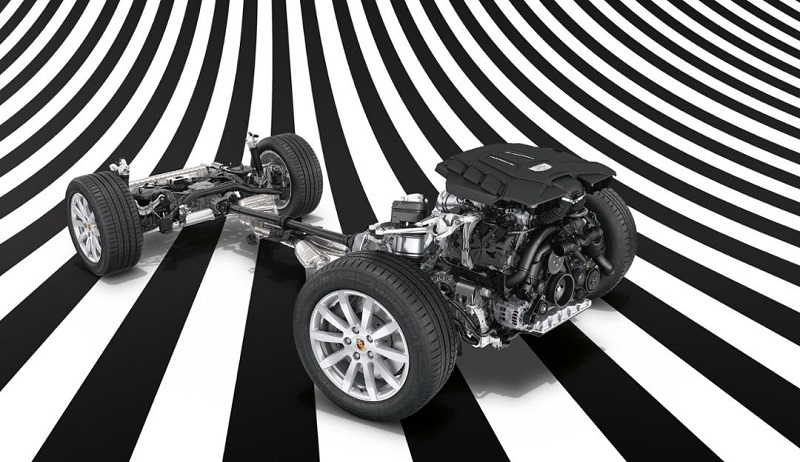

A drive in the new Cayenne Turbo S E-Hybrid is breathtaking—with a system output of 500 kW (680 hp) (Cayenne Turbo S E-Hybrid: Fuel consumption combined 3.9 – 3.7 l/100 km; CO2 emissions 90 – 85 g/km; electricity consumption (combined) 19.6 – 18.7 kWh/100 km) and a maximum system torque of 900 Nm, it accelerates from 0 to 100 kmh in 3.8 seconds, reaching a top speed of 295 kmh. But the SUV doesn’t just show its abilities on straightaways. It’s extremely stable when cornering and steers agilely. Thanks to numerous adaptive systems, it adjusts to any driving situation and steadfastly holds its course when changing lanes. The Cayenne Turbo S E-Hybrid is capable not only of longitudinal but also lateral dynamics.
"我们将之前的所有经验都融入到了新款卡宴中,并使其更加完美"。项目负责人 悬挂 车型系列 SUV
"保时捷 SUV 悬挂车型线项目负责人 Karl Heeß 表示:"我们在新款 Cayenne 中整合并完善了之前积累的所有经验。这些系统的相互配合大大提高了新款 Cayenne Turbo S E-Hybrid 的性能、驾驶安全性和舒适性。保时捷牵引力管理系统(PTM)可根据驾驶情况自适应控制前后轴之间的驱动力分配。三气室空气悬架可根据您对舒适性或运动型驾驶模式的不同需求,调节各种不同的弹簧率。保时捷主动悬架管理系统(PASM)可根据路况和驾驶模式持续调节每个车轮的减震器力度。保时捷动态底盘控制系统(PDCC)可确保 SUV 在转弯时保持水平,横向加速度可达 0.8 g。保时捷扭矩引导系统升级版(PTV Plus)通过有针对性的制动干预来支持转向,并通过完全可变的横向锁止功能在加速出弯时提供更好的牵引力。保时捷 4D 底盘控制系统将所有底盘系统相互连接,并持续计算最佳驾驶状态信息。
The twenty-one-inch wheels, which are standard equipment, support a dynamic driving style. The factory-fitted Porsche Ceramic Composite Brake (PCCB) ensures top braking performance for the most exacting requirements. One useful investment for even more agility and stability is the optional rear-axle steering. Not only does it reduce the turning circle from 12.1 to 11.5 meters by steering three degrees, it also steers the rear wheels up to 80 kmh in the opposite direction from the front axle for greater maneuverability and precision. When driving fast straight ahead, the rear-axle steering has a stabilizing effect, steering parallel to the front wheels up to the final speed, for example, when changing lanes on the freeway. The Cayenne’s front axle therefore doesn’t have to pull the rear axle around—it actively shapes the directional movement. As a result, the Cayenne is able to implement its high system power by combining combustion engine and electric motor safely and efficiently. And what’s the result of all this engineering? In a nutshell, Karl Heeß says, “When you drive the Cayenne Turbo S E-Hybrid, you think you’re sitting in a classic sports car.”
45.5%
Cayenne Turbo S E-Hybrid 的整车重量主要集中在后轴上。这种分配更加均衡,有利于横向动态性能。
245 至 162 毫米
三气室空气悬架可提供最大的离地间隙。结合保时捷主动悬架管理系统(PASM),底盘的硬度和高度可根据地面和情况进行调整。
最多 0.8 克
机电式保时捷动态底盘控制系统(PDCC)可对横向加速度和由此产生的车身侧倾进行补偿。
11.5 米
是后轴转向系统的转弯半径,而没有后轴转向系统的转弯半径仅为 12.1 米。此外,与保时捷扭矩引导增强系统(PTV Plus)的结合可在高速行驶时提供更加灵活的转向和更高的驾驶稳定性。
50 %
得益于保时捷陶瓷复合制动器(PCCB),制动盘的重量得以减轻。
4D
保时捷 4D 底盘控制系统使底盘系统能够根据前方的驾驶情况主动协调行动。
































更多故事
在电动汽车市场谨慎之际,车载代理人工智能是下一个前沿领域
阿尔法-罗密欧-托纳尔在 SUV 中加入 "S "元素
INDY 自动驾驶挑战赛 - CES2025 - 人工智能车手在二十圈内进行五次超车比赛
通过多车竞速和开创性合作展示物理人工智能的未来 印第自动驾驶挑战赛将于 2025 年 1 月 9 日重返 CES 展会
Polestar 3 长程单电机开始在美国生产,官方认证续航里程为 350 英里(EPA)
预览全新设计语言 现代汽车发布大胆而高效的氢 FCEV 概念车
美国电气化公司(Electrify America)启用扩建后的技术园区
2025 GMC Sierra EV Denali 提供更多续航里程和更多选择
智能性能的未来 莲花发布理论 1
印第安纳波利斯赛车场将举办 Indy Autonomous Challenge 人工智能与自动化峰会
全新纯电动讴歌概念车将亮相蒙特雷汽车周
Polestar 向客户交付首批 Polestar 3 电动 SUV