


- The NTT INDYCAR SERIES is going hybrid with the introduction of the Energy Recovery System, or ERS
- Honda Racing Corporation USA to supply Energy Storage Systems for the NTT INDYCAR SERIES field
- The INDYCAR ERS will debut in competition at the Honda Indy 200 at Mid-Ohio presented by the 2025 Civic Hybrid on July 7th
INDYCAR is following on the heels of the Honda Civic, Accord and CR-V, and going hybrid. The introduction of the new Energy Recovery System, or ERS—a collaborative effort between Honda Racing Corporation USA and other suppliers—at the Honda Indy 200 at Mid-Ohio presented by the 2025 Civic Hybrid ushers in a new era of NTT INDYCAR SERIES electrified hybrid racing.
The new INDYCAR ERS hybrid will be combined with the existing 2.2-liter, twin-turbocharged V-6 engine and produce up to an additional 60 horsepower. The hybrid unit will be located within the bell housing area of the car, between the engine and transmission, allowing it to fit within the existing chassis and engine footprint.
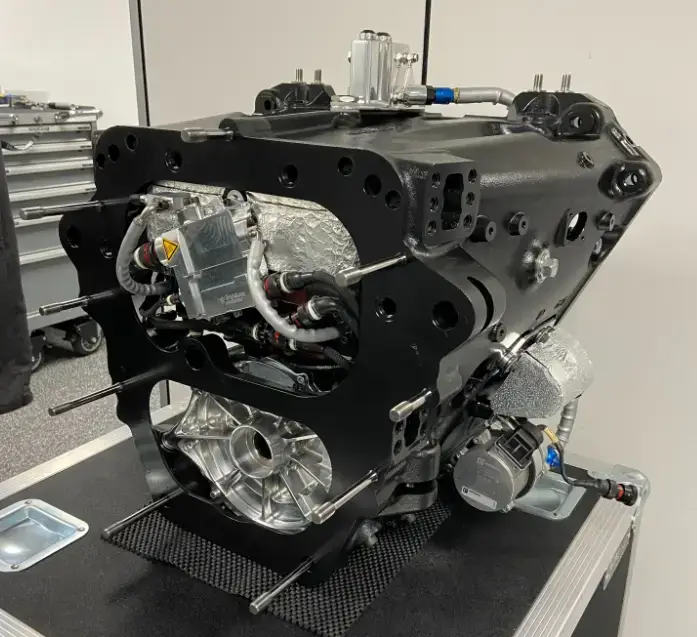

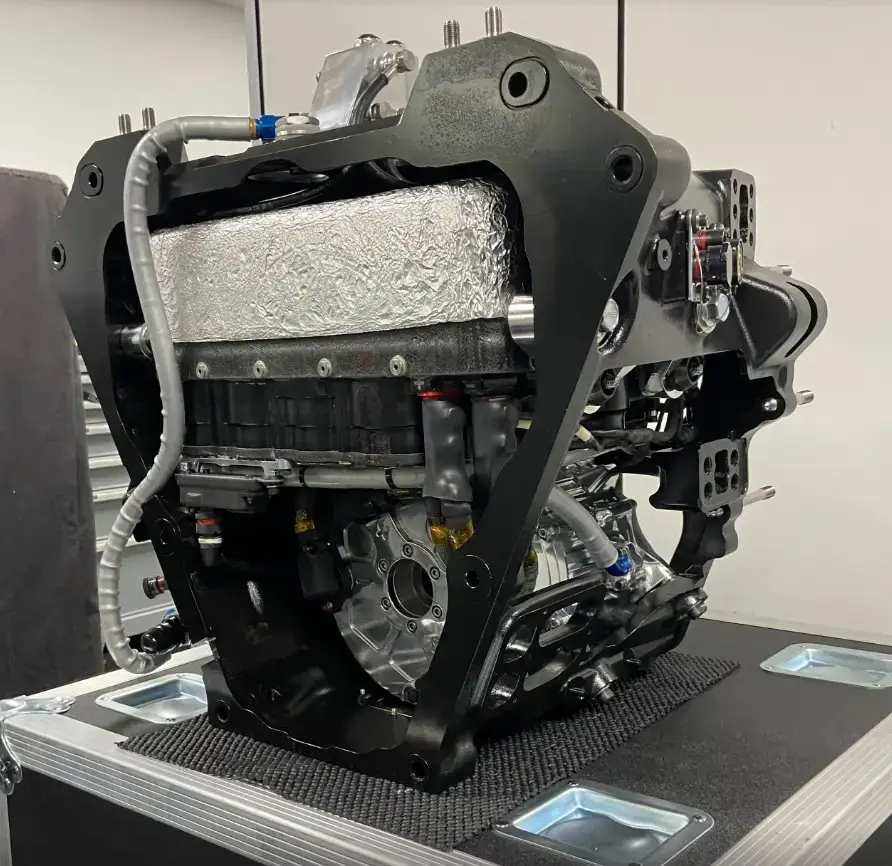

Image Credit: Honda Racing Media
About the ERS
The ERS system will be made up of four major components.
- The Energy Storage System – ESS
- Produced by Honda Racing Corporation USA, the ESS is a series of 20 supercapacitors—designed by Skeleton—that store the energy harvested by the MGU until its deployment by the drivers. HRC US opted to use a supercapacitor rather than a battery because of its ability to both capture and deploy energy faster. The ESS can fully charge and deploy in approximately 4.5 seconds.
- The Motor Generator Unit – MGU Model Name: EMPEL 180
- Produced by EMPEL in collaboration with Ilmor, the Motor Generator Unit, or MGU captures spent energy produced under braking, turning it into electricity to be stored by the Energy Storage System. The MGU is also linked to the driveshaft of the existing Indy car engine—allowing the driver to deploy the harvested energy as additional power.
- DC / DC converter
- Produced by BrightLoop Converters, the DC / DC converter on the IndyCar ERS ensures that the energy from the ESS or generated by the MGU is output at the correct voltage for the existing powertrain, 12 volts.
- Voltage Control Device
- Essentially an oversized fuse, the Voltage Control Device is a safety component that ensures the entirety of the system never exceeds 60 volts.
These components will interface with the existing McLaren Applied-provided TAG-400i ECU or Engine Control Unit. Additional software will be used to ensure the correct synchronicity between the ERS and the Honda—or any other manufacturer—provided engines.
How the ERS works on track
The ERS captures what would otherwise be wasted energy generated under braking and uses it to charge up the supercapacitors within the unit. The ‘regen’ process can be moderated by technology or controlled manually by the driver. When deployed, the ESS sends the energy to the MGU, which is linked to the driveshaft of the existing Indy car engine, adding up to 60 horsepower at the drivers’ disposal.
In the automatic ‘regen’ process, software dictates a set level of regeneration that will occur as the driver is racing. In the manual ‘regen’ process, drivers have more control over the degree of energy harvesting. A button on the steering wheel activates energy harvesting at a set rate, while pulling a paddle on the rear of the steering wheel changes the amount of regeneration.
The process is the same for oval racing in the NTT INDYCAR SERIES. Despite not often lifting or braking on ovals in qualifying situations, it is common to lift on the ovals when drafting or lining up to execute a pass in race-day scenarios. Therefore, regen will occur often during a race as drivers are setting up their passes. Then, energy can be deployed when they are making the pass.
Deployment of the energy stored in the ERS is activated manually by the driver via a button on the steering wheel.
An additional benefit to going hybrid is the ability for the ERS to start or restart the car without the need for the current external starter. With stalling being a common cause for full-course cautions, the ERS will provide enough power that a driver can restart the car without outside assistance. This will not only reduce the number of yellow and red flag periods, but also the risk safety workers face while attending to a stalled race car on course. The system will always keep some energy in reserve to allow for multiple engine restarts should a driver need it.
ERS Stats
- With additional weight-saving measures within the car, the ERS system adds 42.5 kilograms of weight.
- The ERS system can be charged from a 12 volt source. It can be charged in the shop or on pit lane easily. It can also be charged by the engine itself under idle.
- The ERS in its current form generates approximately 60 additional horsepower, but there is room for upward development if needed.
- The ERS generates 45 Newton-meters of torque.
- Much like the current Indy car engine, the MGU operates at a maximum of 12,000 RPM.
- The amount of energy stored per lap varies by track length and type.
- The ESS has a maximum operating voltage of 60 Volts and 2,000 Amps.
- The ESS can be fully charged or discharged by the driver in approximately 4.5 seconds.
- The driver has control of the ‘State of Charge’ or SOC of the ERS, between 60 Volts and 30 Volts. Even if the driver ’empties’ the ESS of charge, 30 Volts will remain in order to restart the car in case of an off or stall.
The first race with the new Energy Recovery System in place will be the Honda Indy 200 at Mid-Ohio presented by the 2025 Civic Hybrid, July 7th at 1:30 PM ET on NBC.
For more information on the INDYCAR Energy Recovery System, see the HRC US YouTube channel: The INDYCAR Hybrid Tech Series, Episode 1: Getting to Know the INDYCAR Hybrid System (youtube.com)
About Honda Racing Corporation USA
Honda Racing Corporation USA (HRC US), has a rich heritage creating, manufacturing, and supporting Honda Racing and Acura Motorsports customers since its founding in 1993 as Honda Performance Development. From pinnacle racing in INDYCAR and IMSA Sports Cars to commercial racing programs, HRC US powers the dreams of professional and amateur racers from age 4 to 40+. HRC US is a wholly owned subsidiary of American Honda Motor Co., Inc. and leads all of Honda and Acura’s high-performance racing programs in North America.
HRC US specializes in the design and development of powertrain, chassis, electronics, and performance parts, as well as technical and race support. The company also offers parts and race support to Honda and Acura amateur and professional motorsports racers; and is continually expanding its palette of racing programs that make Honda racing products available to all racing styles, from karting and Quarter Midgets to the highest levels of professional racing. The HRC US title replaced Honda Performance Development on January 1, 2024, to reflect the new role of the company in Honda’s global racing efforts
... SP的笔记
#EVHNews, #Honda Racing, #INDYCAR, #ERS, #IMSA Sports Cars
































更多故事
帕鲁的统治力与鲍尔的合约之争:2025 INDYCAR 赛季在 R13 多伦多站后展开
INDYCAR 的凯尔-柯克伍德有望在安大略本田经销商印地赛车多伦多站夺冠
NTT INDYCAR 混合动力再生成打孔机在印地 500 资格赛期间揭示了洞察力
Jetson 通过世界首次载人 eVTOL 空中竞速测试,测试敏捷性的极限!
电气个人防护设备 (PPE) 是一种新事物 - 由总部位于科罗拉多州的 OEL Worldwide Industries 生产
玛莎拉蒂GT2 Stradale。新款超级跑车在2024年蒙特雷汽车周全球首发
现代汽车 IONIQ 5 N 在 2024 年派克峰国际爬坡赛上为跨界电动汽车树立标杆
F-150 闪电超级卡车称霸 2024 年派克峰山王赛
赛车界全球首创:塞克斯瓦尔与联合创始人宣布首届精英超级跑车世界杯
新款 CR-V 混合动力赛车视频:本田工程师讲述世界上唯一由印地赛车发动机驱动的 SUV 背后的故事
全电动 SCR1 将于本周末在美国弗吉尼亚州 Hyperfest 首次亮相
福特性能公司推出电动野马 Super Cobra Jet 1800 原型车,目标是刷新 NHRA 电动汽车世界纪录