


The new super sports car is in a league of its own: a 920 CV twin-turbo V8 hybrid powertrain offering the highest levels of performance and comfort for a peerless driving experience
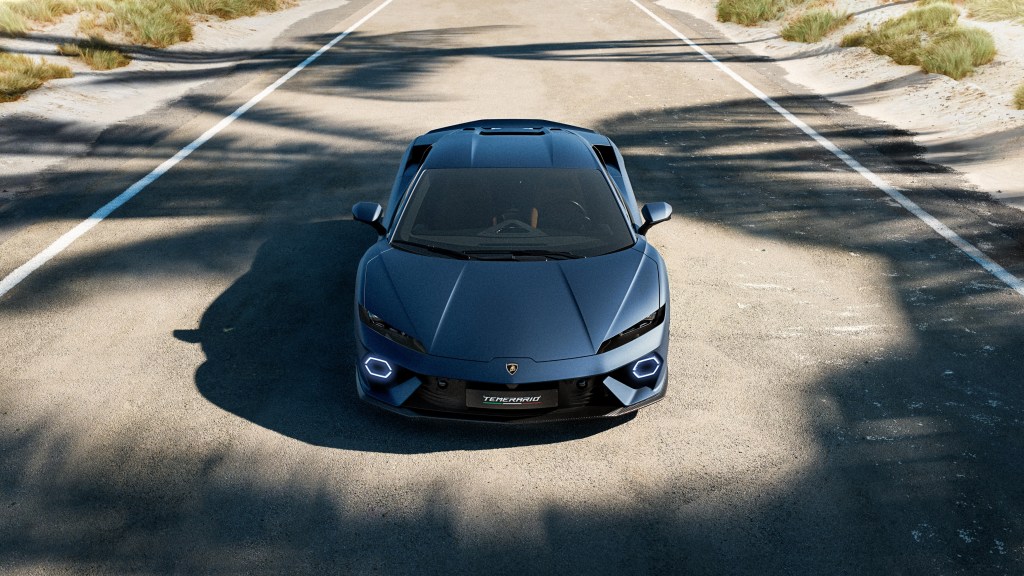
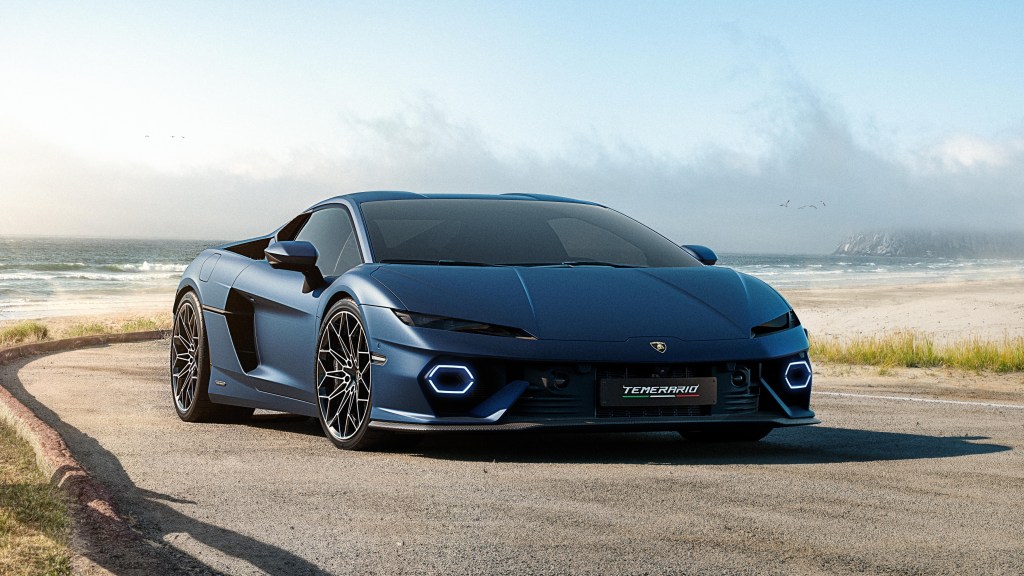
Automobili Lamborghini presents Temerario[1], the all-new super sports car equipped with a twin-turbo V8 hybrid powertrain that redefines the very concepts of performance, driving pleasure and comfort. The Temerario is the second model in the Lamborghini High Performance Electrified Vehicle (HPEV) range, after the Revuelto[2], and completes the hybridization of Sant’Agata Bolognese’s line-up following the market debut of the Urus SE[3].
A star of Monterey Car Week 2024, the Temerario presents itself as the new benchmark in the super sports car segment, thanks to class-beating performance. The new hybrid powertrain combines an entirely new twin-turbo V8 engine with three electric motors, providing a total power output of 920 CV. The twin-turbo V8 has been designed and developed from scratch in Sant’Agata Bolognese and is the first and only production super sports car engine able to reach 10,000 rpm. The performance is an absolute revelation: maximum speed of over 340 km/h (210+ mph), 0 to 100 km/h (0-62 mph) in just 2.7 seconds.


“The Temerario is a genuine ‘fuoriclasse’: a car in a league of its own, an extraordinary and innovative vehicle both from a technical and stylistic point of view,” says Stephan Winkelmann, Chairman and CEO of Automobili Lamborghini. “Every new Lamborghini must surpass its forerunners in performance terms, while at the same time being more sustainable from an emissions standpoint. With the Temerario, we have completed a key chapter in the electrification strategy included in our Direzione Cor Tauri plan: we also become the first luxury automotive brand to offer a completely hybridized range.”
With the Temerario Lamborghini has also achieved new heights in terms of aerodynamic efficiency, combined with stylistic details and lines that represent a further landmark in the brand’s design. Also entirely new is the aluminum chassis which, thanks to the use of a cutting-edge high-strength, ultra-light alloy, significantly increases torsional rigidity and contributes to excellent driving dynamics.
The chassis delivers excellent passenger comfort and increased roominess: the Temerario is a super sports car that expresses its full potential on the track while offering more space for passengers and luggage than any other vehicle in its segment.
The Temerario also delivers the most advanced multimedia experience in Lamborghini history, thanks to the introduction of the Lamborghini Vision Unit system, which provides access to new functions and applications that allow users to relive and share their track and road driving experiences.
POWERTRAIN
The heart of a Lamborghini has always been its drive system. With the new Temerario, Lamborghini takes an entirely new approach, with several years of development, delivering an unprecedented super sports car powertrain, comprised of an extremely high-revving biturbo Internal Combustion Engine concept combined with three electric motors. “We wanted to develop an incomparable, high-performance sports engine that combines the best of two worlds: an emotional combustion engine based on a twin-turbocharged V8 and a performance-oriented electrification. Our concept of incorporating three electric motors with a combustion engine ensures to achieve instantaneous acceleration, torque vectoring and energy recuperation. With the Temerario we are redefining the segment,” says Rouven Mohr, Chief Technical Officer at Lamborghini. “Temerario is in a league of its own, in terms of engineering solutions and performance.”
The new powertrain is integral to the second super sports car in Lamborghini’s High-Performance Electrified Vehicle (HPEV) product range. The first target was to achieve the highest possible power and torque, while at the same time offering the response of a classic high-revving naturally aspirated engine. Therefore, only high-performance components are used in the drivetrain: the new 4.0-liter V8 biturbo engine has a specific output of 200 CV per liter and works together with an oil-cooled axial flow electric motor fully integrated in the V8 housing. Propulsion is supported by two electric motors on the front axle.
“By combining a high-revving V8 biturbo with three electric motors of axial flux type we are taking a very sophisticated approach that has never been seen before in series production and the result will impress Lamborghini fans all over the world – With this adrenaline-machine, we are catapulting ourselves into a new paradigm for super sports cars,” continues Mohr. This linearity and progression, with high revving characteristics, which was previously only possible with naturally aspirated engines, now offers high torque with high engine speeds, thanks to the turbochargers.
The new engine with the internal designation L411 is now one of the most powerful engines in the segment. The V8 biturbo delivers its peak power of 800 CV from 9,000 to 9,750 rpm and 730 Nm of torque between 4,000 and 7,000 rpm. The electric motor, in P1 position (between the V8 engine and the gearbox), ensures immediate response starting from low engine speed and continues consistently through gear shifts, working as a “torque gap filler” and improving the transient response, giving the sensation of linear and limitless progression up to 10,000 revs. Thanks to the two large turbochargers, efficiency and performance are increased at top speeds. These are located compactly in the V of the engine as a “hot V8” to optimize the packaging and thermal management. The V8 biturbo can rev up to 10,000 revolutions per minute: the maximum boost pressure of the turbochargers is 2.5 bar (abs). The turbines are controlled with an electrical wastegate and a wheel-speed sensor. Lamborghini has designed air filter boxes with tubular cartridges, making them extremely compact to create space and become even more efficient.
At the heart of the crankshaft housing is a flat-plane crankshaft with a 180-degree angle between the crankshaft bends. This crankshaft, which is typically used in racing engines, ensures optimal fluid dynamic behavior due to even firing orders in comparison to the cross-plane crankshaft, and a unique engaging sound. Titanium conrods reduce the rotating masses and offer excellent material properties in terms of strength and lightness, reducing weight. The engine casting material consists of A357+Cu, the same used in motorsport applications.
The particularly robust and reliable finger followers covered in DLC (Diamond Like Carbon) can withstand speeds of up to 11,000 revolutions per minute – a range previously reserved for racing engines in motorsport. This is also where the engineers drew their inspiration for the engine layout concept. As is usual in motorsport, most of the auxiliary units are located on one side, including the two water pumps for the intercooler and engine cooling, as well the electronically controlled barrel valve for fine temperature control.
The oil and water pumps, which are arranged in series on the right-hand side of the engine, are driven up to a specific ratio pump speed of 7,800 rpm. The engineers integrated the oil tank in one side of the engine that works according to the dry sump principle with five-stage gear scavenge pumps. As a result, the drive unit is flat and sits low in the Temerario lowering the center of gravity of the vehicle, while improving its handling characteristics. A newly designed water-cooling system ensures a balanced temperature regime. The internal cooling of the cylinder heads has been extremely refined using 3D printing technology for the casting core, allowing a uniform cooling of the combustion chamber and high knock resistance. The direct petrol injection atomizes the fuel extremely finely into the eight combustion chambers at up to 350 bar, thus ensuring fast and clean combustion.
The characteristics of a smoothly revving, naturally aspirated engine, with the power delivery of a turbo engine in combination with electric drives, is unique in the way it works and sounds. Lamborghini has thus succeeded in developing a new V8 biturbo that combines the pronounced linearity of the rev development in the previous Lamborghini naturally aspirated V10, with enormous power and torque of a modern turbo engine. In conjunction with the three electric motors, the system output is an outstanding 920 CV / 676 kW.
Engine Sound
Lamborghini has invested significant technical effort in the development of a unique and unmistakable audio experience from the Temerario’s completely new drive system. Ensuring a highly emotive and unmistakably Lamborghini sound and sensation feedback.
“With the V8 biturbo, the amplitude and frequency of the sound increase as the engine speed rises, and thanks to the flat-plane crankshaft, subtle vibrations underline the power of the drive depending on the engine speed. For the occupants, the ride in the Temerario is an incredible experience for all the senses. Drivers will be roused by the powerful Lamborghini sound and will feel its unmistakable character with all senses,” says Mohr.
The technical complexity of this special soundscape is immense. To ensure that the crescendo up to 10,000 rpm provides an emotional, sporty sound, Lamborghini integrates various technical measures and enriches them with high-frequency modulation effects.
A special connection between the engine banks enhances the sound effect of the power unit subject to the engine speed. Depending on the driving mode, the silencer box and exhaust valve of the V8 biturbo work in the low rev range to improve acoustic comfort. At the same time, the different driving modes are clearly differentiated through acoustic tuning.
An exhaust system routed from the manifold to the tailpipes also acoustically emphasizes the combustion processes of the engine. Lamborghini guarantees a clear and clean sound thanks to the smoothed pipe routing. The height and position along the transverse axis of the exhaust tailpipes further focuses the sharpness of the engine with a high frequency component, thus emphasizing its power.
In addition, Lamborghini has designed the engine mounts and body in such a way that the drive has a flat crankshaft character that can be felt by the driver at high engine speeds and under full load. Thanks to the flat-plane crankshaft, in which the crank pins are at an angle of 180 degrees, the V8 biturbo produces subtle vibrations.
Lamborghini makes the amplitude of these vibrations more pronounced at high engine speeds, which enhances the overall impression of speed and power at high revs. The sound engineers also manage to transport the pleasantly sporty acoustics into the interior and at the same time emphasize the desired frequencies by means of lightweight body parts and panels. The light vibrations transmitted to the frame provide a comprehensive sensory experience, in addition to the thrilling soundtrack. As the engine speed increases, the seat vibrations intensify, especially at higher engine speeds of up to 10,000 rpm: a speed range previously only known from motorsport.
Furthermore, an additional sound symposer emits acoustic waves into the interior, creating an immersive auditory experience in every driving mode.
Lamborghini has also designed a completely different soundscape for the different driving modes Città, Strada, Sport and Corsa. In Città mode, Lamborghini offers a high level of comfort with a special sound from the electric drive unit. The composition achieves a smooth and pleasant listening experience in urban environments. In Città mode, the Temerario is emission-free and quiet.
In Strada mode, for country roads and fast autoroutes, occupants enjoy a comfortable and homogeneous V8 biturbo sound experience with evenly distributed frequencies, without any barking or sharp peaks for sporty yet discreet driving pleasure. In Sport and Corsa modes, Lamborghini amplifies the second- and fourth-order overtones of a V8 four-stroke engine and air-intake harmonics, creating an exhilarating and powerful listening experience. At speeds of up to 10,000 rpm, the engine not only delivers incredible power of up to 920 CV, but also an inimitable sound – a new Lamborghini sound of a new generation.
Three electric motors for support
The new drivetrain incorporates three electric motors. With 110 kW of power each, the electric motors are an integral part of the powertrain strategy. Two oil-cooled axial flow electric motors with a total peak output of 220 kW and up to 2,150 Nm of torque (the continuous output is 60 kW) drive the front axle when required to achieve all-wheel drive. The electric front axle weighs just 73 kilograms, and each electric motor only 15.5 kilograms.
A major challenge was the design of the powertrain to be as compact as possible. To achieve this, the engineers integrated the electric motor into the housing of the V8 biturbo, directly, without an intermediate clutch. This fills any turbo lag, no matter how small, at any speed delivering 300 Nm of torque. The entire electric drive unit is located compactly between the combustion engine and the dual clutch transmission. This electric motor also works as a starter motor and three-phase generator.
Furthermore, the two electric motors on the front axle also improve the power output and can transform the new Temerario into a fully electric super sports car. In this way, Lamborghini reduces CO2 emissions by up to 50 percent compared to the Huracán.
Battery
The Lamborghini Temerario is equipped with a lithium-ion high specific power (4500 W/kg) battery pack situated within the central tunnel, keeping the car’s center of gravity as low as possible and ensuring optimal weight distribution. The battery is protected by a lower structural layer and is connected to the front electric motors, the rear electric motor, and an integrated recharging unit.
The battery pack is 1550 mm long, 301 mm high, and 240 mm wide, containing pouch cells with an overall capacity of 3.8 kWh. When the charge drops down to zero it can be recharged using both ordinary domestic alternating and charging column current up to 7 kW in power, and completely recharges in just 30 minutes. It can also be recharged under regenerative braking from the front wheels or directly from the V8 engine.
Thanks to the e-axle, the Temerario incorporates Lamborghini Dinamica Veicolo (LDV) 2.0 system. Electric torque vectoring increases the car’s agility in narrow cornering as well as its stability in high-speed cornering, distributing torque optimally to each wheel. Unlike conventional systems, the new torque vectoring intervenes on the brakes only when strictly necessary, to maximize efficiency and ensure a more natural driving style as well as an even higher level of performance. When braking, the e-axle and rear electric motor contribute to deceleration, reducing stress on the brakes while recharging the battery.
Dual-clutch transmission
The gears of the second Lamborghini super sports car in the High-Performance Electrified Vehicle (HPEV) category are shifted by an eight-speed dual-clutch transmission (DCT) installed transversally behind the V8. The newly designed compact transmission meets all the requirements of such a powerful drive unit.
To save installation space and weight, the layout is not a standard DTC. An additional hollow shaft is used to share the same synchronizers for different gear torque paths. Without electrical components, the new DCT weighs less than the Huracán’s seven-speed dual-clutch transmission and achieves faster shift times. At 560 millimeters long, 750 millimeters wide and just 580 millimeters high, the new DCT also remains extremely compact.
Lamborghini has installed the new eight-speed dual-clutch transmission behind the V8 biturbo. This creates sufficient space in the center tunnel for the lithium-ion battery that powers the electric motors. Another advantage is that this technical layout optimizes the weight distribution of the Temerario and ensures a compact wheelbase for ideal driving dynamics and balanced handling.
With the new eight-speed dual-clutch transmission, drivers experience extremely fast shift times even with a very sporty driving style and daily driving. Continuous downshifts in particular are easy: when braking and simultaneously pressing and holding the left shift paddle the transmission shifts down gears sequentially, allowing the driver to feel and hear the gear change. The long ratio eighth gear reduces the engine speed, which helps to optimize fuel consumption and improves drivability at cruising speed. The Temerario gearbox has been equipped with a mechanical reverse gear system.
设计
勇敢、出人意料、纯正的兰博基尼:兰博基尼 Centro Stile 通过 Temerario 打造了一款全新的、独一无二的超级跑车,为兰博基尼的设计 DNA 开启了新的篇章。全新的设计创造了自己的基本和标志性特征。
"兰博基尼 Temerario 标志着 断然 我们设计语言的新里程碑。 我们称之为 "基本和标志性",其表面增强了运动性能。从 第一眼看上去,这是一款纯粹的、未来主义的、迷人的超级跑车,它的比例紧凑而灵活,采用了新的六边形灯光标志,"感觉就像一名飞行员 "的内饰设计和锋利的线条强调了新的混合动力系统及其 "感觉就像一名飞行员 "的内饰设计。 充满驾驶乐趣的动力。我们为您提供全新 V8 双涡轮增压发动机的清晰视图 发动机 的 e运动心 汽车 和创新的 动力之源"。 兰博基尼汽车有限公司设计总监 Mitja Borkert 说。
The new car’s design points towards the future of Lamborghini’s legendary mid-engine sports cars, while the shapes of the car stay pure, athletic and well-defined. With a clean-sheet design and new drive concept, the Temerario carries a connection to its legendary predecessors while its all-new persona is characterized by reduction, clarity, sharpness and recognizability. "我们从零开始,将设计与动感完美融合在一起。 紧凑的车身比例,证明这是一款真正的兰博基尼超级跑车,专为日常驾驶乐趣和赛道驾驶乐趣而设计。 博尔科特解释说。
室外
从第一眼起,Temerario 就以其典型的兰博基尼轮廓展现了兰博基尼的基因:清晰而纯粹的线条、短而紧凑的悬臂、集成的空气动力学设计以及大胆的鲨鱼鼻。
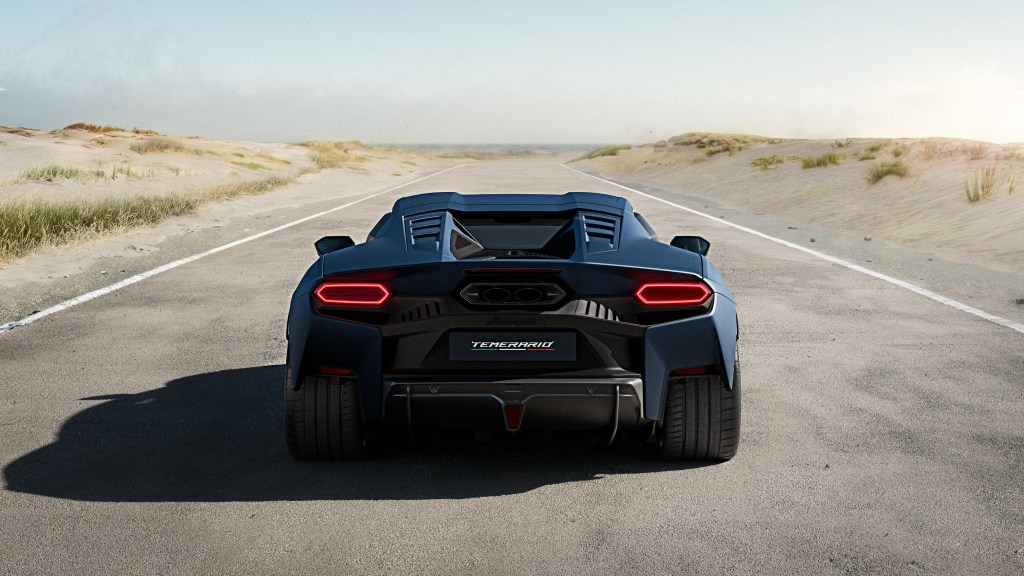
兰博基尼的设计语言不断演变,创造出全新的六边形日间行车灯 (DRL) 标识,使其具有极高的辨识度和远距离识别能力。六边形概念是整车的主要设计主题:车身主体、侧面进气口、尾灯以及引人注目的六边形排气管。 "这种独特的六边形灯光标志确保了兰博基尼系列的高识别度,在远处也清晰可辨"。 emphasizes Borkert. The geometric hexagon paradigm has been one of Lamborghini’s most recognizable symbols since the 1960s.
六边形日间行车灯包含一个空气隧道,是将车灯融入空气动力学概念的设计理念的一部分。此外,位于前大灯下方的空气通道改善了前部高性能制动系统的空气动力学性能和冷却效果,从而提高了效率。
The Temerario’s designers combine elements from aviation with a visceral muscularity that starts at the front. The design is characterized by well-formed athletic surfaces and a cabin that tapers towards the hexagonal tailpipes. The tip of the hood dominates the entire front end in a strong and striking shark’s nose design: a symbol of bravery and speed. The sharp, elegant headlights are slightly overlapped by the hood, drawing inspiration from the sports motorcycle world. Air-guiding slats connect the low front spoiler with the hood, while fins on the sides direct the airflow along the flanks. Sharply shaped side skirts support the aerodynamics and increase downforce at the same time.
宽阔的车肩和修长有力的肌肉线条,从车头延伸至车门,凸显了Temerario的极致运动感。侧门后的进气口强劲而高效,确保了 V8 双涡轮增压发动机性能所需的气流,同时在视觉上增强了底盘的下压力。固定式后扰流板突出了车尾的宽度。紧凑而富有科技感的车尾融入了赛车运动的细节,例如延伸至车底的宽大扩散器和集成式排气尾管。尾灯采用了新的六边形设计,同时还允许空气通过,以冷却发动机。
车顶还具有空气动力学功能。略微向后偏移的外形将空气直接导入集成式尾翼。设计师几乎以隐形的方式将进气口整合到了雕刻肩部上方的乘客舱后面:这是一个功能性很强的部件,有助于为发动机、散热器和涡轮增压器提供充足的空气。
Temerario 的核心是配备集成轴向通量电动机的新型 4.0 升 V8 双涡轮增压发动机。在实现新动力系统概念的过程中,设计师和工程师开发了新的底盘和车身:兰博基尼的 Centro Stile 拥有最大的自由度,可以以视觉上适当的方式展示驱动系统,以强调真正的中置发动机感觉。兰博基尼公开展示了 V8 双涡轮增压发动机,就像透明发动机罩下的摩托车发动机。
"Temerario简洁而激动人心的造型,为兰博基尼标志性的基本设计语言赋予了新的形态,并向未来迈出了一大步"。 博克特说。 "Temerario将时尚与性能完美结合,在一款新车型中展现了前所未有的设计、工程和驾驶体验"。
内饰:"感觉像飞行员
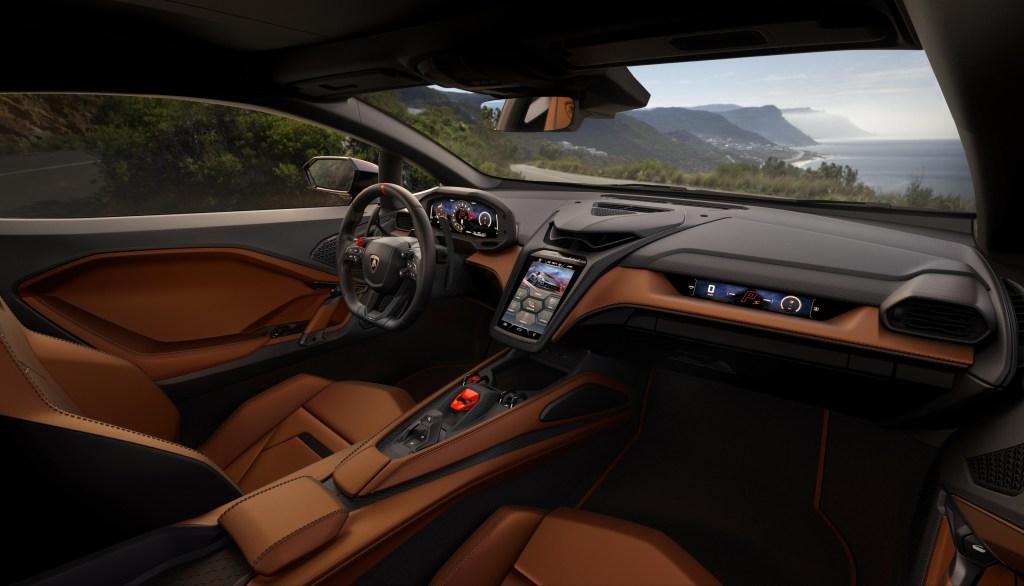
"兰博基尼 感觉自己是飞行员 "的理念跃然纸上 创新 在特美拉里奥、 通过 低矮的座椅位置、纤细轻巧的仪表板以及方向盘的完美倾斜度 允许驾驶员 感受兰博基尼典型的驾驶乐趣。数字屏幕与机械和物理按钮(如标志性的启动按钮或以赛车为灵感的方向盘)相结合,带来了 "驾驶者 "的独特体验。 互动"、 "博尔科特解释道。"全新的电动调节舒适型运动座椅是标准配置,也可选装碳纤维双层运动座椅,将乘客包裹在车内,就像一只完美贴合的手套,符合人体工程学原理,将乘客与驾驶舱和中控台装置环绕在一起"。.座椅有多种不同的颜色和四种不同的缝线图案可供选择。目前,没有任何一款兰博基尼座椅能像新开发的 Temerario 舒适型座椅一样提供如此广泛的选择:18 向可调舒适型座椅具有加热和通风功能。
内饰与非凡的外观设计相得益彰,在数字和物理体验之间创造了一种平衡。兰博基尼在整个内饰中使用了碳纤维、皮革和动态麂皮绒 Corsatex 等最优质的材料,将它们结合在一起,创造出具有特殊感觉的高品质内饰体验。许多内饰部件还可选装碳纤维材料,包括中控台部件、出风口、门板、仪表板部件、方向盘和转向柱。除了优雅的轻质材料外,客户还可以找到经典的兰博基尼元素,例如灵感来自航空的启动/停止 "电源按钮"、电子变速杆和方向盘上的红色 "排队 "指示灯,以突出 Temerario 的极致运动感。
秉承 "感觉就像一名飞行员 "的理念,新一代仪表盘让驾驶员和副驾驶员迅速与汽车融为一体。操作清晰直观,驾驶员可以从最佳的座椅位置触及所有控制按钮。标志性的六边形空调出风口与驾驶舱优雅地融为一体,中控台上还留有放置智能手机和钱包的空间。
新开发的方向盘带有可选的碳纤维元素,从赛车世界中汲取灵感,让驾驶者能够控制主要的驾驶功能。方向盘左侧是红冠转子,用于选择驾驶模式。下面是用于提升车辆的升降功能按钮和 "赛车启动 "按钮,两者之间是指示灯开关。驾驶员只需轻触按钮,即可操作起步控制系统,实现最大程度的控制。
试点互动
全新的现代图形概念在车内得以延续。标志性元素分布在车内,包括中央通道、触摸屏瓷砖以及通风口和接缝周围。 “The hexagonal graphics, the choice of materials and the fresh, digital graphics make the interior of the Temerario very sophisticated and emotive,” says Borkert. For the first time, the co-pilot has their own slim and informative display, which they can use to call up driving information and vehicle functions. Pilots operate the instruments important for driving in analog form, while those for the entertainment system and navigation are operated by touch via the display in the center console. The “Pilot Interaction” concept actively involves the driver even more closely in the operation of the Temerario, providing perfect control in driving.
The new Human-Machine Interface (HMI) “Pilot Interaction” serves as the information center of the Temerario. Lamborghini developed the new graphics and design exclusively for the Temerario, evolving the new graphic design DNA started in the Revuelto. A new 8.4-inch display mounted on the center console gives the option to swipe and individualize the themes. The pilot and copilot can use it to slide apps and information left and right from the central display to the driver’s and co-pilot’s screens, just like a smartphone. While the driver receives information on the 12.3-inch digital instrument cluster, the data for the front passenger is shown simultaneously on a 9.1-inch screen in front of them. If the pilot changes the driving mode, the display graphics change to match the drive.
More space and room for everyday life
Compared to the Huracán, the interior of the Temerario has been completely redesigned, while at the same time further developing the design language first seen on the Revuelto. Thanks to the new spaceframe chassis, the Temerario offers significantly more interior space than its predecessor. A low and ergonomic seating position offers the pilot and co-pilot a perfect connection and integration with the vehicle while at the same time providing a high level of comfort, true to the Lamborghini philosophy of “Feel like a pilot”.
The new spaceframe chassis concept increases headroom by 34 mm and legroom by 46 mm, plus a 4.8° increase in visibility and accommodates passengers up to 200 cm tall, even when wearing a helmet. This means that even the tallest drivers wearing a helmet can comfortably complete their laps on a racetrack. There is room for items such as sports equipment in the load compartment under the front hood with 112 liters of stowage volume available equivalent to two cabin trolleys. Other everyday items can be stowed behind the seats.
“Offering customers the greatest possible comfort was one of the first objectives we set ourselves,” said Paolo Racchetti, Director of Model Line Temerario. “Our super sports cars are driven and enjoyed by customers in the city and on long journeys: improving habitability while keeping the dimensions and proportions of the car as compact as possible was an important challenge during its development. Temerario is an absolutely versatile super sports car, ready to give its all on the track or to be the perfect travel companion during a long weekend.”
Personalization and ‘Alleggerita’ Package
The Temerario is launched with two new dedicated colors, Blu Marinus (blue) and Verde Mercurius (green). Over 400 body colors and special liveries will be available offering clients almost infinite customization possibilities through Lamborghini’s Ad Personal program. The new rims, 20” at the front and 21” at the rear, are available in three different designs and materials: cast rims (three colors), forged (four colors) and carbon. A wide range of carbon fiber elements for exteriors and interiors is offered: front splitter, mirror caps, side upper vents, rear diffuser; central tunnel, instrument cluster, air vents, door switch frame, steering wheel in carbon, steering column cover and gearshift.
For the first time a Lamborghini debuts on the market, it will be available with the ‘Alleggerita’ (lightweight) package for customers more oriented towards track driving. It reduces the car’s weight by 12.65 kg through body components alone, with a reduction of over 25 kg when incorporating lightweight interior elements, carbon rims and titanium muffler, and is even more efficient from an aerodynamic point of view (+67% aerodynamic load).
The Alleggerita pack includes a splitter made of CFRP (Carbon fiber reinforced polymers) (-0.19 kg) and recycled carbon fiber underbody panels (-0.55 kg): a further step in Lamborghini’s commitment to sustainability. New side skirts in CFRP deliver a further 0.6 kg of weight saving, as do the rear bonnet (-9.2 kg) and the panel where the high-load spoiler is integrated (-1.6 kg).
Inside, the Lightweight Pack incorporates carbon fiber door panels and passenger footrest to offer a driving experience inspired by the world of competition. Window weights are also reduced: the rear window in lightweight glass saves 0.85 kg, while the fixed side windows are in polycarbonate (-0.45 kg).
An alternative Carbon Pack is also available, which includes a rear diffuser, rear-view mirror caps and carbon side air intake covers, helping to reduce the weight by a further 1.82 kg.
AERODYNAMICS
With the Temerario, Lamborghini has achieved the peak of aerodynamic efficiency through the attainment of three primary design goals: stability at high speeds; increased cooling performance; and maximum braking efficiency.
Lamborghini’s designers and engineers took into account the new hybrid powertrain and the increased aerodynamic load targets, particularly at the rear, when developing the bodywork and underbody of the Temerario: the result is +103% rear downforce compared to the Huracán EVO, increasing to +158% if the car is equipped with the Alleggerita Pack.
Each individual element was designed to contribute to excellent aerodynamic performance. Starting with the front, where the DRLs have become aerodynamic elements, the hexagonal lights with dedicated air intakes and deflectors have the task of conveying airflow from the bumper to the upper part of the side radiators, and the two fins have been installed on the inlets. The upper fin with a wing-shaped profile diverts the flow downwards, which is captured by the second horizontal fin, directing it to enter the radiator perpendicularly and maximizing cooling efficiency.
Moreover, the fins which make up the grilles on the wheel arches convey the flow to the outside of the wheel, moving it away from the side radiator and minimizing its slipstream, with the dual effect of reducing aerodynamic resistance and moving the downforce towards the rear.
The wing mirrors, working in unison with the front of the vehicle, have the goal of not only minimizing drag, but also directing the air towards the side radiators, increasing the cooling capacity of the mechanical components.
The roof design with a central channel directs air towards the rear spoiler, integrated in the vehicle body and thus improving the aerodynamic efficiency and increasing downforce. The curved sides of the engine hood also contribute to this result, increasing the portion of air which flows through the side part of the spoiler. The optional Alleggerita package features a high-load lightweight rear spoiler, obtained by increasing the height of the trailing edge with consequent increase in curvature.
The underside of the vehicle also plays a structural role in terms of aerodynamic efficiency. The underbody is equipped with vortex generators: three pairs of fins arranged like the branches of a tree increase the rear aerodynamic load, assisting the action of the diffuser which, thanks to a 70% greater surface area compared to the Huracán EVO and an angle increased by 4°, maximizes the vertical extraction of the air flow from the bottom. The increased cooling demand dictated by the new turbo-hybrid powertrain has necessitated the development of a new radiator layout, providing a 30% improvement in cooling performance.
Moreover, to maximize the Temerario’s exceptional performance, a new brake cooling concept has been developed to optimize vehicle braking. The front section incorporates a deflector fastened to the lower suspension arm which exploits the flow diverted by the front diffuser and directs it towards the front brake caliper, helping to cool it. Another two specific inlets have been incorporated into the bumper to convey a high air flow from the bumper itself towards the disc ventilation channels; then a wye duct – with dual inlet but a single outlet – draws in air at high pressure, helping to improve the brake system cooling. The overall result is a total improvement in cooling performance over the Huracán EVO of 20% for the discs and 50% for the calipers.
The rear incorporates a solution already successfully tested on the Revuelto. The ventilation channels of the rear discs are fed via a NACA duct positioned in the front part of the rear wheel housing, which collects the high-energy flow of the underbody and directs it towards the brake cooling duct.
SPACEFRAME
The structural assembly of the Temerario sees the new Body-in-White constructed with a multi-technology aluminum spaceframe approach to withstand the higher loads deriving from the new hybrid power unit. This guarantees excellent mechanical qualities together with remarkable efficiency in weight reductions.
Made entirely of aluminum, the frame of the Temerario debuts a new high-strength alloy for high-pressure castings; the use of high-strength hydroformed extrusions; and an increase in the number of hollow castings with thin closed inertia sections, achieved through the use of internal cores. These technologies allowed the constructional complexity of the spaceframe to be minimized and weight to be optimized, while at the same time the new hybrid powertrain adopts over 50% fewer components compared to the same parameters on the Huracán. In addition, the Temerario incorporates a significant reduction in the number of heat welds: over 80% less total weld bead length compared to the Huracán.
The new construction archetype delivered increases in torsional stiffness of over 20% to be achieved compared to the previous generation spaceframe, as well as offering the best possible vehicle weight limitation, ensuring the highest level of occupant safety and making a significant contribution to the vehicle’s excellent driving dynamics.
DRIVING EXPERIENCE
Temerario offers 13 driving experiences that make the super sports car versatile and capable of exciting both in daily driving and on the curbs of a circuit. The drive modes can be selected via the rotors on the steering wheel: the upper left red-crowned rotor allows the driver to choose between Città, Strada, Sport, Corsa and Corsa Plus (ESC Off – electronic controls deactivated); furthermore, by pressing the “checkered flag” button for two seconds, Launch Control is activated to exploit the maximum potential when starting from a standing start.
“Temerario offers an innovative and emotional driving experience at the same time. The e-4WD system including real torque vectoring is a perfect combination,” comments Mohr. “On the one hand we have a car that is absolutely precise and effective on the track, on the other we have a more typically rear-wheel drive character, oriented towards maximum involvement for the driver.”
Together with the hybrid system, three new dedicated driving modes also debut: Recharge, Hybrid and Performance, selectable via the upper right rotor. The choice of driving mode is displayed on the driver’s 12.3-inch digital dashboard, where the animated graphics replicate the rotation of the selectors to make the selection immediately intuitive.
Città is the experience designed for driving in urban areas, which can be used both in Hybrid mode (fully electric with a maximum power of 140 kW – 190 CV) and in Recharge mode, to allow the V8 to quickly recharge the battery if necessary. Strada is ideal for extra-urban routes and long autoroute journeys, for efficient and sporty driving, with all-wheel drive that activates on demand. The V8 engine always supports electric motors, with maximum power of 800 CV delivered by the powertrain in Hybrid mode, while in Recharge mode the maximum power output is 725 CV. The front e-axle supports torque vectoring and the active aerodynamics work to offer maximum stability at high speeds, for example on the motorway.
By selecting Sport, the Temerario changes character and the car’s behavior is set to offer emotive, fun and responsive driving in each of the three combinable modes: Recharge, Hybrid and Performance. The combustion engine, assisted by the hybrid system, is active in all three situations, delivering a maximum of 920 CV of power while the sound of the V8 becomes more present; the gearbox responds with maximum responsiveness while the suspension and aerodynamics enhance the agility of the car and the pleasure of driving in corners.
The pinnacle of effectiveness and power expressed, both in terms of performance and sound, is reached with Corsa, the mode designed to enhance the dynamic capabilities of Temerario on the track. In Performance, the powertrain expresses the peak of its potential by delivering 920 CV, and the control of the hybrid system is calibrated to get the most out of the e-axle both in terms of torque vectoring and all-wheel drive, for ultra-sporty driving but accessible at the same time. The sound also reaches maximum emotiveness for an engaging and exhilarating sound experience.
The Drift Mode option also makes its debut on the Temerario, to help the driver generate controlled oversteer and maximize driving fun. Operated via the lower rotor on the right side of the steering wheel, Drift Mode is adjustable according to three different levels: from level one, which facilitates oversteer while maintaining a limited yaw angle, up to level three dedicated to expert drivers to allow a wide angle of yaw.
HMI, INFOTAINMENT AND CONNECTIVITY
The new Temerario is the most advanced car in the history of Lamborghini from a multimedia perspective. Compared with the Huracán, the connectivity is significantly more advanced, offering users services and features related to everyday use of the car, together with others designed specifically for the fun of driving on road or on track.
Users can take advantage of a navigation system with over-the-air map updates and real-time information on traffic and points of interest. The connectivity suite incorporates entertainment content including web radio, voice assistant and wireless smartphone connection via Apple Car Play and Android Auto. The Temerario offers a Human Machine Interface (HMI) system which consists of three displays: the 12.3″ digital instrument panel, the 8.4″ central screen and the 9.1″ passenger display. The system features graphics including 3D, with animations, widgets and a completely new style created specifically for the car. Furthermore, the three screens are controlled by a single “electronic brain” to ensure maximum coherence of design, interaction and use.
The instrument panel, in addition to having a completely renewed graphic design, presents new customization functions that allow users to select three types of views: “Dynamic view” with vehicle dynamics information; “Navi view” with full screen map; and “Essential view” with essential information for driving. The Infotainment system implements new functions with a wide range of customization options to create a truly immersive experience, including the swipe function that allows users to move contents from the central monitor to the driver and passenger displays with a gesture of the fingers, like on a smartphone screen.
Among the customizations available on the central display is the option of creating a page that manages up to three applications simultaneously, allowing the driver to easily reach their ‘favorite’ functions such as climate control, navigation, radio and much more, minimizing distraction while driving. Favorite shortcuts to individual applications can also be created, such as the climate control, telephone contacts, radio and navigation destinations.
The Temerario also debuts the Lamborghini Vision Unit (LAVU) system, an option which, via three cameras and a dedicated control unit, enables three new on-board services: Lamborghini Telemetry 2.0, Memories Recorder and Dashcam. The apps are easily accessible through the infotainment system and steering wheel controls, as well as via the Lamborghini Unica app.
The LAVU system enhances the authentic “Feel like a pilot” experience, using telemetry in a way that records performance on the track to help improve it. It also allows the best driving moments to be saved using the Memories Recorder and improves safety via the Dashcam.
The three hi-definition cameras are positioned to frame both the cabin and the road: the front camera is positioned on the roof liner and records images from the road or track; the ‘emotion’ camera, also on the roof liner, frames the cabin to capture the emotions of the driver and passenger; while the rear wall camera is attached to the fireproof shield, behind the seats, and frames the steering wheel, instrument panel and windshield.
驾驶体验 "版块允许用户通过 LAVU 系统回顾所有用车经历,而 "远程行程统计 "服务则收集每次行程后的行驶距离和混合动力系统使用情况的数据。
兰博基尼 Unica 应用程序甚至可以在 Temerario 发动机关闭时扩展体验。用户可以使用智能手机或 Apple Watch 持续监控自己的爱车,查看油量、电池电量、续航里程以及车辆停放的准确位置等信息。此外,用户还可以通过该应用程序执行一系列遥控操作,如锁定和解锁车门。
Temerario 的安全保护功能之一是兰博基尼连接车辆跟踪系统 (LCVTS),该系统可主动检测未经授权的车辆使用,并通过应用程序和安全运营中心通知车主,以便及时启动必要的程序。兰博基尼从车辆设计阶段就开始保证客户个人数据的保密性和保护性,采用 "隐私和安全设计 "方法,在产品的整个生命周期内保持最高标准。
声音
Temerario 音响系统由来自意大利维琴察的意大利音响工匠 Sonus faber 精心打造。这套高级系统营造出一种身临其境的音响环境,其特点是 Sonus faber 享誉盛名的自然音效。每个组件都经过精心设计和微调,以确保聆听体验与意大利工艺的艺术性和精确性相得益彰。Temerario 宽大的座舱和强劲的发动机与 Sonus faber 音响系统相得益彰,确保了动人的豪华体验。
兰博基尼遥测 2.0
兰博基尼遥测 2.0 是一款专为赛道使用而设计的车载应用程序,旨在提高驾驶者的信心和性能,帮助驾驶者充分发挥 Temerario 的潜能。 车内的图形界面和用户体验经过全面改造,使操作更加直观、即时,并配有方向盘控制,非常适合在赛道上使用。
在赛道训练期间,可在仪表盘显示屏上查看赛道以及单圈时间和每个赛段的相关信息。还可以选择一个参考时间,立即获得成绩报告。
兰博基尼遥测技术 2.0 包含全球最重要的 150 多个赛道(包括变体);与 Huracán STO 上的前一版本相比。此外,还提供了更多信息,如轮胎气压或电子干预在何时何地启动。
Users can also record videos of their experience using the cameras integrated into the LAVU system: immediately after the session, the telemetry data and videos can be viewed directly on the dashboard display or shared on the Unica app for a more in-depth analysis, even combining the car data with the user’s heart rate thanks to Apple Watch integration.
由于兰博基尼 Squadra Corse 车手的通力合作,兰博基尼 Unica 应用程序的可用性也得到了增强。通过模块化可视化显示线路图、识别录制的视频和在赛程中收集的数据,性能分析现在更加方便用户使用。通过集成在应用程序中的视频编辑器,用户可以选择不同的框架、模板和新的叠加部件,从而在个性化视频中共享图像和数据。
记忆录制器
在赛道外,Temerario上的每一个精彩瞬间都可以通过 "记忆录制器 "记录下来。该功能允许驾驶员使用LAVU系统摄像头记录长达两分钟的驾驶过程,并通过Unica应用程序共享视频。通过选择摄像头框架、图形界面上显示的信息和视频格式,"记忆录制器 "的可用性和个性化选项得到了进一步提高。
车载摄像头
LAVU 系统还允许使用旨在提高驾驶安全性的 Dashcam 应用程序。三个摄像头提供了一个高效的连续监控系统,在发生事故或紧急操作时,会自动录制一分钟的视频。此外,还可在撞击或操作前查看长达 40 秒的图像,并可通过信息娱乐系统和 Unica 应用程序查看视频。
轮胎
作为兰博基尼的长期合作伙伴和全新兰博基尼Temerario的独家轮胎合作伙伴,全球领先的优质轮胎和可持续移动解决方案提供商普利司通开发了全套轮胎阵容,以最大限度地发挥超级跑车在赛道内外的全年性能,满足所有驾驶者的需求。
普利司通为Temerario的夏季和赛道装配选择了其标志性的Potenza轮胎系列,提供定制的Potenza Sport和Potenza Race轮胎。定制的普利司通Potenza Sport轮胎采用花纹设计,最大限度地提高了干地操控、湿地操控和高速性能,从而增强了车辆的运动性能。
除了这款标准的超高性能轮胎外,普利司通还设计了一款符合Run-Flat标准的Potenza Sport轮胎。这使驾驶员在爆胎后仍能保持控制,并以最高 80km/h 的速度继续安全行驶 80 公里。普利司通将这一技术应用到特美拉里奥的定制轮胎中,使其具有更高的抓地力、出色的牵引力和极高的路面驾驶舒适性,同时还能确保安全和安心。
此外,普利司通还专门设计了一款赛车轮胎,以释放超级跑车的惊人性能。这款独特的普利司通 Potenza Race 赛车轮胎可为所有赛道爱好者提供出色的抓地力、更强的操控性和持久的性能。该轮胎的高抓地力得益于专为赛道使用而开发的配方,并将其应用于公路。
普利司通还定制了 Blizzak LM005 冬季装备,使超级跑车即使在严酷的冬季条件下也能提供顶级性能,从而完善了满足每一位驾驶者需求的完整阵容。
这些不同的定制轮胎在欧洲开发和制造,将提供 20'' 和 21''' 尺寸的八种规格。 继 Huracán STO、Tecnica、Sterrato、Huracán EVO 和 V12 HPEV Revuelto 之后,Temerario 是最新一款配备普利司通轮胎作为原装设备的兰博基尼超级跑车。
技术规格
Powertrain
Engine: V8 Bi-Turbo – Hot-V 4.0l
排量3995.2 立方厘米(243.8 立方英寸)
内径和冲程:90 毫米 x 78.5 毫米(3.54 x 3.09 英寸)
压缩比: 1 : 9,3
最大功率 @ rpm(内燃机):800 CV @ 9000-9750 rpm
最大功率(ICE+EE 组合):920 CV
每分钟最大扭矩(内燃机):730 牛米 @ 4000-7000 转/分钟
Cooling System: Liquid cooled – dedicated circuit for HV components
Engine Management System: Central DI – Bosch
润滑系统:干式油底壳
Transmission
变速箱自动变速箱
变速箱8 档
离合器双离合器
混合动力系统
电池:锂离子高比功率电池,带小袋电池
发电机P1 eMotor
前电子轴:220 千瓦 @3500rpm
Performance
最高时速: 343 公里/小时
0-100 km/h 加速时间: 2.7 秒
制动速度 100-0 km/h:32 m
车身和底盘
框架全铝
机身机身: 铝
Wheels
轮胎 - 前部:普利司通 Potenza Sport 255/35 ZR20
轮胎 - 后轮:普利司通 Potenza Sport 325/30 ZR21
前轮辋:20 x 9J
后轮辋:21 x 11.5J
Braking system
制动器:CCB Plus(增强型碳陶瓷制动器)制动器,配有铝制固定式单体卡钳,带 10 个活塞(前)和 4 个活塞(后)。
前制动器410x38 毫米制动盘
后制动器390x32 毫米制动盘
Dimensions
轴距:2.658 毫米(1046457 英寸)
长度:4.706 毫米(1852756 英寸)
宽度(不包括后视镜):1.996 毫米(78 58268 英寸)
宽度(包括后视镜):2.246 毫米(884252 英寸)
高度:1.201 毫米(47 28346 英寸)
干重:1.690 千克(3.725.8 磅)
重量功率比:1.84 千克/CV
[1] 该车尚未上市销售,因此不受第 1999/94 EC 号指令的限制。燃料消耗量和排放数据还处于类型批准阶段。
[2] Revuelto 的油耗和排放值:综合油耗:综合油耗:11.86 升/100 公里;综合耗电量:10.1 千瓦时/100 公里;综合二氧化碳排放量:10.1 千瓦时/100 公里:综合耗电量:10.1 kWh/100 Km;综合 CO2 排放量:276 g/km;综合 CO2 能效等级:A 级:综合 CO2 排放量:276 g/km;综合 CO2 能效等级:G 级:G;电池电量耗尽时的综合油耗:17.8 升/100 公里;二氧化碳排放量和电池电量耗尽时的综合能效等级:G;[WLTP]。
[3] Urus SE 的耗油量和排放值:综合耗油量:2,08 升/100 公里;综合耗电量:39,5 千瓦时/100 公里;综合 CO2 排放量:2,08 千瓦时/100 公里:综合耗电量:39.5 kWh/100 Km;综合 CO2 排放量:51.25 g/km;综合 CO2 能效等级:A 级:综合二氧化碳排放量:51.25 g/km;综合二氧化碳能效等级:B级:综合二氧化碳排放量:51.25 g/km;综合二氧化碳效率等级:B;电池电量耗尽时的综合油耗:12.9 l/100km;二氧化碳排放量和电池电量耗尽时的综合效率等级:G;[WLTP]:G;[WLTP]。
… SP 的笔记,,
#EVHNews, #兰博基尼 Temerario、#Lamborghini、#HPEV、#Hypercar、#E Motorsport、
World Speed Challenge (worldspeedchallenge.com)
E Racing Nation (eracingnation.com)
EVWRA (evwra.org)
EVVTOL 科技国度 (evvtoltechnation.com)


































更多故事
液氢是 H24 飞行任务的赛道能源目标
兰博基尼 Temerario 赤裸裸的 "Fuoriclasse"!
NILU 超跑来了!
Maserati Set For World Premiere Of New Super Sports Car
Red Bull RB17 Red Bull Advanced Technologies Reveals Hypercar
保时捷 Taycan Turbo GT 和配备魏斯阿赫套件的 Taycan Turbo GT 在拉古纳塞卡赛道和纽博格林赛道创下单圈时间纪录
保时捷将于 2025 年推出两款全新 Panamera 车型 4 E-Hybrid 和 4S E-Hybrid
Bugatti Bolide Undertakes Extreme Track Testing To Perfect High-Performance Aerodynamics
兰博基尼LB744是混合动力超级跑车的新标杆
首次亮相的 Czinger 汽车和 21C 超级跑车
奇骏生产进入后半程
Czinger 在日内瓦国际车展全球首发前展示了革命性 21C 超级跑车的外观和声音