


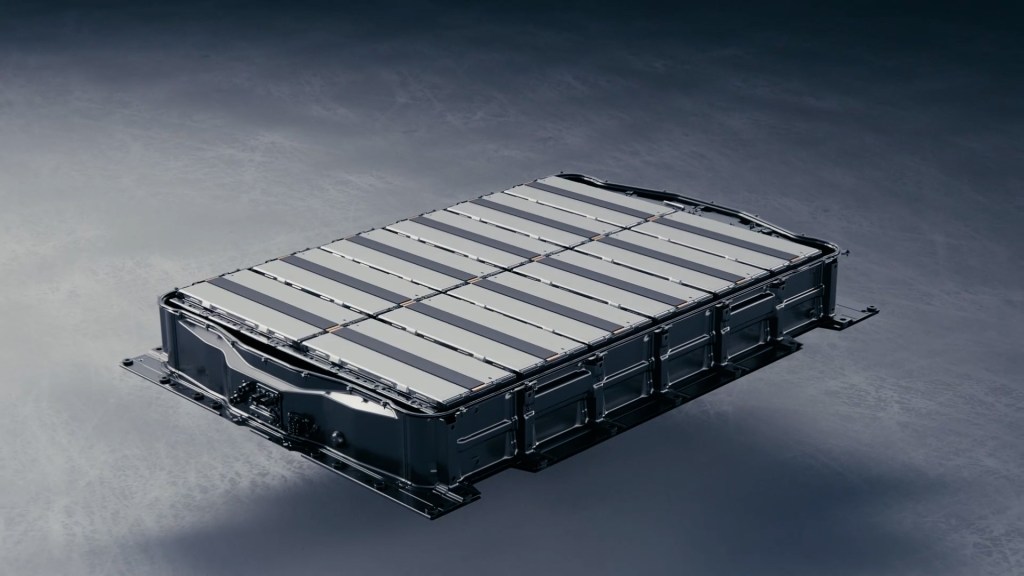
GM Defense, a subsidiary of General Motors, is providing commercial battery electric technology in support of the University of Texas at Arlington (UTA) Pulsed Power and Energy Laboratory (PPEL) and Naval Surface Warfare Center Philadelphia Division (NSWCPD). The project, Evaluation of Electric Vehicle Batteries to Enable Directed Energy (EEVBEDE), is funded by the Operational Energy Innovation office of the U.S. Department of Defense (DoD), through its Operational Energy Capability Improvement Fund (OECIF). UTA PPEL will evaluate the technology to understand current capabilities of commercial automotive batteries under dynamic discharge and charge scenarios. The team’s evaluation of the technology will help provide pathways and options for domestically supplied energy storage for future use in military platforms.
GM Defense está aprovechando la arquitectura de propulsión de la Plataforma Ultium de GM para evaluación y pruebas. La Plataforma Ultium puede ofrecer potencia, autonomía y escala más allá de cualquier tecnología híbrida o eléctrica de rango extendido anterior de GM. Modular y escalable, la Plataforma Ultium puede utilizar diferentes químicas y formatos de celdas, lo que la hace adaptable a las necesidades cambiantes y a la incorporación de nuevas tecnologías a medida que estén disponibles. Utilizando las tecnologías de baterías de su empresa matriz, GM Defense puede ayudar a resolver los desafíos de energía y almacenamiento de energía del DoD. El trabajo realizado en este nuevo esfuerzo proporcionará información sobre el rendimiento y las consideraciones de diseño cuando las baterías se utilizan en operaciones más dinámicas y de alta potencia de las que se enfrentarían en aplicaciones más típicas. El soporte de OECIF juega un papel clave en el desarrollo de nuevas tecnologías de energía y almacenamiento de energía, que brindan capacidades avanzadas al DoD y ayudan a evitar que la energía y el almacenamiento de energía sean un factor limitante.
“The Department of Defense can benefit from billions of dollars in GM investments to develop and manufacture transformative battery technologies,” says Steve duMont, president of GM Defense. “These technologies offer significant potential to enhance operational capability, whether at the tactical edge or on installations throughout the world. GM Defense welcomes the opportunity to support this important project and to help transition our global defense and government customers.”
“We are excited to work with GM Defense to test the Ultium Platform to determine its potential for use in future warfighting applications. PPEL has a long relationship with the DoD and the Office of Naval Research for testing the limits of batteries used in high power applications, and we are in a unique position to evaluate this technology and make recommendations for future use cases,” said David Wetz, a professor of electrical engineering at UTA and director of the PPEL.
“As a Carnegie R-1 university, UTA is committed to working with industry to better develop and understand the potential of new technology. This collaboration between PPEL, GM Defense and the DoD will not only improve our nation’s military capabilities, but also adds to our workforce development efforts producing next generation engineers who will solve our nation’s complex problems,” said Peter Crouch, dean of UTA’s College of Engineering.
GM Defense previously announced its participation in the Defense Innovation Unit’s Jumpstart for Advanced Battery Standardization (JABS) project. Similar to EEVBEDE, JABS is designed to evaluate and test high voltage battery systems to optimize commercial technologies. GM Defense provided a prototype of a battery system based on GM’s Ultium Platform for the project. Under the same contract, GM Defense demonstrated mission power capabilities by integrating a high-voltage battery pack into a light tactical utility vehicle. Key learnings from JABS will help inform the integration requirements of future battery electric defense solutions. To learn more about GM Defense projects, visit www.gmdefensellc.com or follow us on LinkedIn.
... notas de SP


































Más historias
CES 2026: Las tendencias de la automoción se inclinan hacia la IA en medio de la realidad del mercado de los vehículos eléctricos
Únase y explore el mayor evento de ACT sobre tecnología avanzada para vehículos comerciales de Norteamérica.
El equipo de protección individual (EPI) eléctrico es una realidad, fabricado por OEL Worldwide Industries, con sede en Colorado.
Hyundai Motor Company y el Grupo Škoda colaborarán en el avance del hidrógeno y en soluciones energéticamente eficientes para la movilidad
Los problemas de cuña invaden el 73º Concurso de Elegancia de Pebble Beach
End Of Life For SOLO EV Start Up Due To Design & Performance Issues
Michael Leiters, Consejero Delegado de McLaren, pide que el Reino Unido sea un centro de excelencia en tecnología de baterías de última generación para supercoches
Más allá de los camiones de hidrógeno El programa piloto de pila de combustible de GM se amplía para crear un modelo de lugar de trabajo con bajas emisiones
BMW Group Breaks Ground On New High-Voltage Battery Assembly Factory In South Carolina
Will Sustainable Mobility Only Be Electric?
La Hyperion XF-7 HyperFuel Power Station Pod hace su debut mundial en Los Ángeles
SEMA expone algunas de las exageraciones sobre el hipercoche eléctrico de hidrógeno Hyperion HP-1